
Happy Friday! South Korean President Yoon Suk-yeol was caught on a hot mic this week labeling U.S. members of Congress “idiots.”
Hey pal, only we get to call them that!
Quick Hits: Today’s Top Stories
The U.S. Treasury Department on Thursday imposed sanctions against Iran’s morality police over the recent death of a woman who was in custody for allegedly violating Iran’s dress code. The Treasury Department also sanctioned leaders of Iran’s security forces for the violence perpetrated against those protesting the woman’s death and calling for regime change. According to Hengaw, a human rights watchdog, at least fifteen Iranians have died during the protests, and another 733 have been injured.
President Joe Biden announced Thursday that the federal government will foot the entire bill for Puerto Rico’s recovery costs from Hurricane Fiona for the next month, paying for search and rescue, debris removal, power restoration, and other needs. Fiona made landfall on the island Sunday, and, as of yesterday, nearly a million residents remained without power. The storm is expected to reach Atlantic Canada this weekend.
Several COVID-19 vaccine mandates have disappeared this week: New York City Mayor Eric Adams announced Tuesday that the city will no longer require vaccines for children participating in after-school activities or mandate that private employers require employee vaccination. Federal Judge Terry Doughty on Wednesday struck down the Biden administration’s vaccine requirement for students and teachers at Head Start, the federal early education program for low-income families. And Canadian Prime Minister Justin Trudeau has reportedly approved letting Canada’s vaccine requirement for border crossings expire on September 30.
U.S. District Judge Raymond Dearie—the Mar-a-Lago special master—ordered Donald Trump’s lawyers to state by September 30 whether they think FBI agents lied about documents taken from the Florida resort last month, either by describing them inaccurately or claiming to have retrieved documents that weren’t on the property. Trump has claimed that the FBI planted documents and that he’d declassified the documents marked classified, but his legal team so far hasn’t made those claims in court despite Dearie’s questions.
The House on Thursday passed four police funding bills, including the Invest to Protect Act, which would give $60 million a year for five years in grants to local police departments for de-escalation training, body cameras, mental health treatment, recruitment, and other efforts. The legislation faced opposition from the progressive wing of the Democratic Party, and it’s unclear whether or when the bills will pass the Senate.
Indiana Judge Kelsey Hanlon issued a preliminary injunction on Thursday temporarily blocking enforcement of the state’s near-total abortion ban. “There is reasonable likelihood that this significant restriction of personal autonomy offends the liberty guarantees of the Indiana Constitution,” Hanlon wrote. The law—which took effect September 15—included exceptions for rape, incest, fatal fetal abnormalities, and to save the life or health of a pregnant woman. Todd Rokita, the state’s attorney general, said he plans to appeal the decision.
The Labor Department reported Thursday that initial jobless claims—a proxy for layoffs—rose to a seasonally adjusted 213,000 last week, up 5,000 from the previous week’s revised level of 208,000. The slight increase still leaves jobless claims below the pre-pandemic average of 218,000 in 2019, signaling that the labor market remains tight.
The average number of daily confirmed COVID-19 cases in the United States declined about 24 percent over the past two weeks according to the CDC, while the average number of daily deaths attributed to the virus—a lagging indicator—fell 3 percent. About 25,900 people are currently hospitalized with COVID-19 in the U.S., down from approximately 29,700 two weeks ago.
No More Mr. Nice Fed
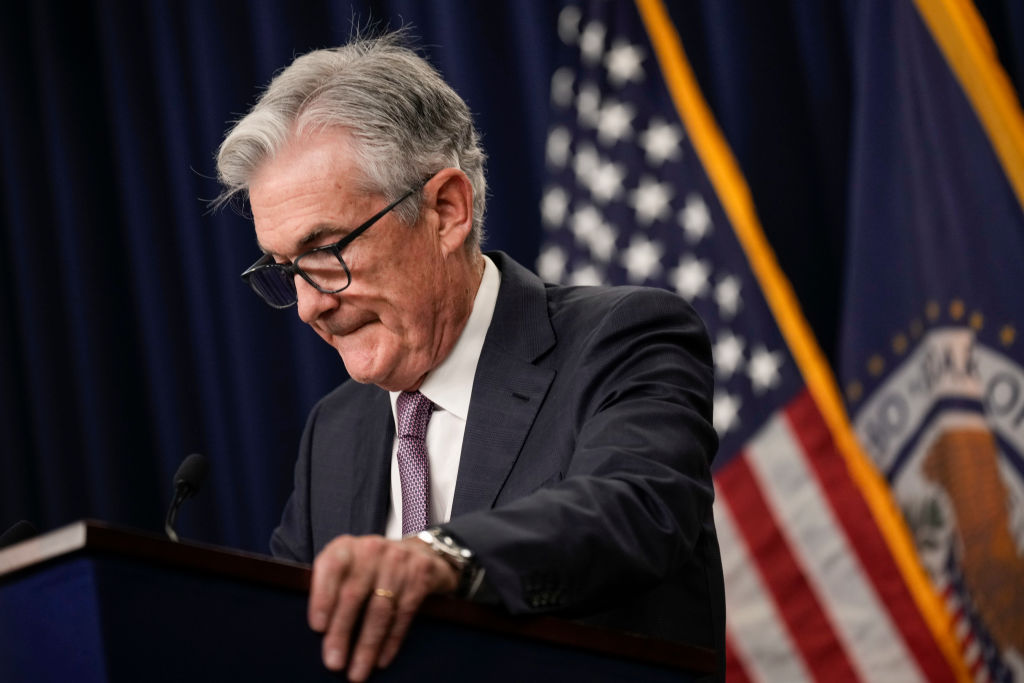
For a few fleeting weeks there in August and early September, dovish economists—and those blessed with an unmerited sense of optimism—could present a not-totally-crazy case that we’d be able to muddle our way through the inflationary spiral of the last year-and-a-half without sacrificing too much economic growth.
Want to see more of The Dispatch in Google search?
Add Us as a Preferred Source
Declan Garvey is the publisher of The Dispatch and is based in Washington, D.C. Prior to joining the company in 2019, he worked in public affairs at Hamilton Place Strategies and market research at Echelon Insights. When Declan is not assigning and editing pieces, he is probably watching a Cubs game, listening to podcasts on 3x speed, or trying a new recipe with his wife.


